
The United States Federal Register is open to PUBLIC Comment until September 20, 2026, to post YOUR views on the principles of religious exemption and informed consent as it applies to “Categories Used in Federal Vaccine Recommendations and the Role of Shared Clinical Decision-Making”
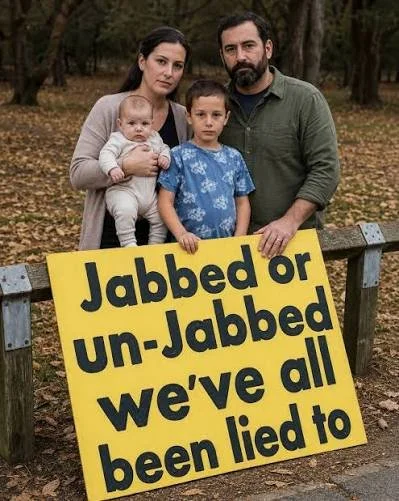
Unattributed photo: Source Facebook
Our list is rather large, and some of our followers now live in other states. This is a national issue. Click the link below to leave your comment. The Take Action button only works for people with New Jersey addresses.
Self-governing friends — the Federal Register is open for YOUR comment until September 20, 2026.
TWO STEPS:
1. Click on the take action button to give your opinion to your elected U.S. Senators and U.S. Congressional representative.
2. Next step: click on the link to the Federal Register to leave your comments about the vaccination recommendations.
HHS has asked the public whether the categories used in federal vaccine recommendations — routine, risk-based, and shared clinical decision-making — are adequate, and what role individual autonomy, informed consent, and religious freedom should play.
Two principles must be unmistakable in the official record:
1. Recommendations are not commands. The U.S. immunization schedule issued through HHS is a recommendation. Categories on that schedule must never be written, labeled, or implemented as if they were mandates.
2. We are always partners in the decision. People who decide about vaccination for themselves, or for children in their care, are not afterthoughts. Full informed consent comes first. Only then can shared clinical decision-making begin. After the information is given, the person — parent or guardian — chooses the course of treatment.
HHS itself invited comment on individual autonomy, informed consent, and religious freedom. Use that opening. Tell the Department that religious conviction is not a loophole and that informed consent is not limited to one category on a chart.
You may identify yourself or comment anonymously. You may request a copy of your comment by email.
Background made public by the Citizens Council on Health Freedom: https://www.cchfreedom.org/wp-content/uploads/2026/08/0901.pdf
Thank you for what you do to preserve self-governance for families and children.
Reverend Greg Quinlan
Sample Message for your Federal Register Comments
Subject line
Docket HHS–OS–2026–0332: Recommendations Are Not Mandates — Protect Informed Consent and Religious Exemption
Sample comment body
If you agree with the sample message we presented below, copy and paste it into the appropriate comment spaces on the form for the Federal Register:
I am submitting this comment on Docket No. HHS–OS–2026–0332, Request for Information: Categories Used in Federal Vaccine Recommendations and the Role of Shared Clinical Decision-Making.
Federal vaccine recommendations must remain recommendations. The immunization schedule published under the authority of the Department of Health and Human Services is not a statute, not a court order, and not a substitute for the judgment of a free people. Any category system — routine, risk-based, shared clinical decision-making, or a future label — that is treated in schools, workplaces, clinics, or public programs as if it were compulsory betrays that fact.
Informed consent is not a subcategory. It is the precondition of ethical care. A clinician must give material information about benefits, risks, uncertainties, alternatives, and the right to refuse before any immunization is administered to an adult or to a child. Only after that disclosure can shared clinical decision-making begin. Shared decision-making does not mean the clinician decides and the patient assents. It means the person — or the parent or legal guardian — chooses the course of treatment.
Religious exemption and religious conviction are not administrative inconveniences. They are protected by the First Amendment and by the conscience of the person who holds them. Recommendation categories should not be drafted, labeled, or implemented in a way that treats religious refusal as noncompliance, or that implies consent and clinical discussion apply only when a shot is placed in a “shared clinical decision-making” box.
I urge the Department to:
First, state in plain language, in every category description and downstream guidance, that a federal recommendation is not a mandate and does not extinguish the right to refuse.
Second, treat informed consent and parental authority as applying to every recommended immunization, not only to shared clinical decision-making products.
Third, adopt a presumption in favor of individual autonomy, informed consent, and religious freedom when evidence is limited, when benefit varies by person, and when values and faith are part of the decision.
Fourth, refuse any category architecture that quietly converts a recommendation into coverage rules, school rules, or clinical defaults that punish dissent.
Fifth, make shared clinical decision-making mean what the words say: a genuine partnership after full disclosure, with the patient’s or parent’s choice controlling the outcome.
Self-governing people, and especially parents and legal guardians, must remain partners in every vaccination decision. Please put that principle into the official record of this docket.
Thank you to everyone who has given. We still need your help!
Every summer is hard for nonprofits, and we’re feeling it too. This year is even tighter than usual. We know money is tight for a lot of families right now. September is still summer and, frankly, turns out to be the worst month of the season.
Still, we’re asking you to consider a one-time gift of $20 or more to the Center for Garden State Families. If you’re able, making a monthly donation would help us even more.
Your support keeps us in the fight for parents and kids in New Jersey.
Thank you for standing with us.
Rev. Gregory Quinlan