
The Tomb is Empty!
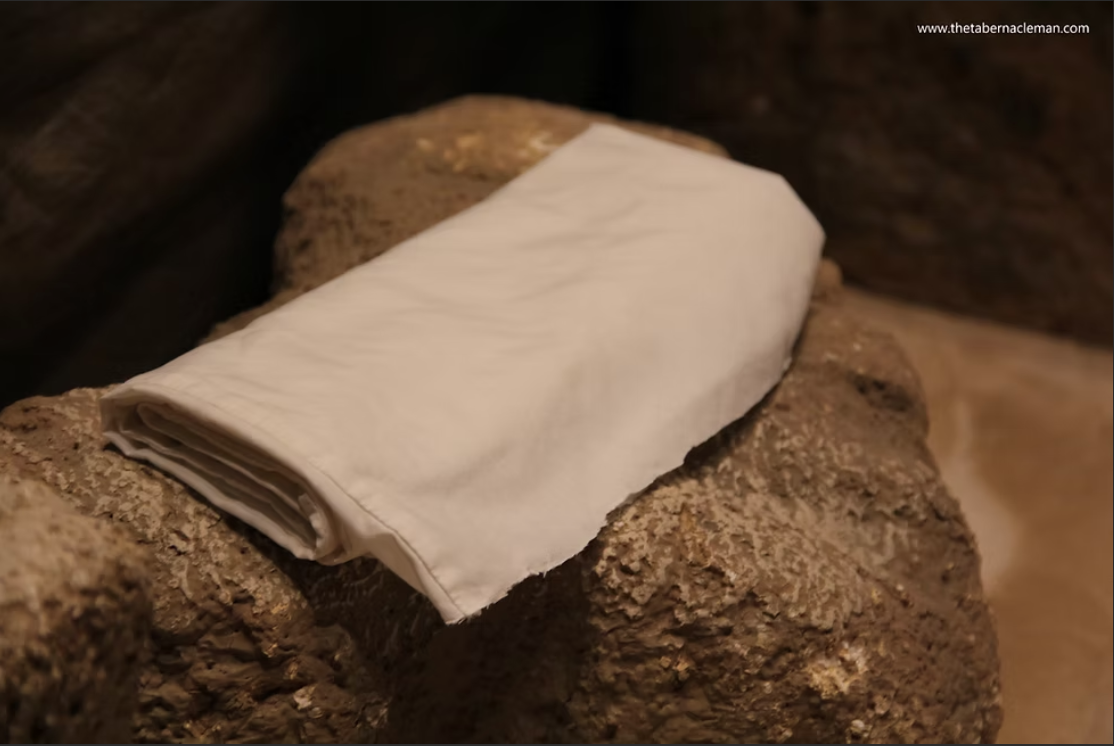
Then Simon Peter arrived and went inside. He also noticed the linen wrappings lying there, while the cloth that had covered Jesus’ head was folded up and lying apart from the other wrappings. Then the disciple who had reached the tomb first also went in, and he saw and believed — John 20: 6-8 NLT
Have you ever walked into a room and known immediately that someone had been there, not because of what they took, but because of how they left things?
In John 20, we find one of the most breathless scenes in the Bible. It’s early Sunday morning. It’s dark. Peter and John are sprinting toward the tomb of Jesus, their hearts pounding with a mix of adrenaline and dread. Mary Magdalene has just told them, "They have taken the Lord out of the sepulchre" (John 20:2).
They expect to find a crime scene—a desecrated grave, a stolen body, chaos.
John gets there first, looks in, and freezes. Peter catches up and barges straight inside. What they see isn't a crime scene. It is a scene of absolute, impossible tranquility.
The body is gone. The linen wrappings are lying there. But there is one detail John pauses to record, a detail so specific it has captivated believers for 2,000 years:
The napkin (face cloth) was folded.
Why did Jesus fold the napkin?
It wasn't just tidiness. The text does not explicitly state the symbolic reason, but the deliberate placement clearly signaled order, intention, and calm. In a moment of cosmic upheaval, the folded cloth stood as the first silent witness that the tomb had not been disturbed by human hands.
To understand the napkin, you have to think like a detective. If enemies had stolen the body, they wouldn't have unwrapped it. A dead body covered in 75 pounds of sticky spices and gum (myrrh and aloes, brought by Nicodemus) is difficult to carry. Thieves would have taken the body with the wrappings.
If the disciples had stolen the body (as the soldiers were bribed to say), they would have been in a frantic panic. They wouldn't have taken the time to unwrap the head, roll up the face cloth, and place it neatly aside.
"And the napkin, that was about his head, not lying with the linen clothes, but wrapped together in a place by itself." —John 20:7 (KJV)
The Greek word for "wrapped together" is entylissō , meaning rolled up or folded.
The Moment John Believed 🦋
Many scholars propose that the linen wrappings may have retained the shape of the body—collapsing like an empty cocoon—based on the Greek description. While Scripture does not specify the exact appearance, the scene was clearly orderly and untouched.
This detail was crucial. Scripture records that when John saw this, "he saw, and believed" (John 20:8).
The folded cloth was not merely a detail—it was the evidence that moved John from confusion to faith. The Holy Spirit inspired John to record this because it authenticated the Resurrection to an eyewitness. Taken from Bible with LIfe